At Baramouda, we bring the power of circular innovation to the heart of communities and cities. By combining smart collection systems, food waste recovery, and urban farming solutions, we help municipalities, neighborhoods, and local businesses turn everyday waste into everyday value.
Urban Waste, Reimagined – The Baramouda Way
Cities generate thousands of tons of organic waste every day—but most of it ends up in landfills, creating pollution and greenhouse gases. At Baramouda, we see this waste differently: as a resource for healthier soils, greener spaces, and stronger communities.
Through tech-enabled logistics and community partnerships, we’ve already helped cafés, schools, and residential districts divert millions of kilograms of organic waste away from landfills—transforming it into compost, biofertilizers, and urban farming inputs.
Tailored Recycling Solutions for Every Community
Urban waste comes from many sources, and we adapt our solutions to meet them all. We collect and recover organic waste from:
☕ Cafés & Restaurants – Spent coffee grounds, food scraps
🏢 Offices & Corporates – Canteen waste, pantry discards.
🏥 Hospitals & Clinics – Organic food residues.
🏫 Schools & Universities – Cafeteria and kitchen leftovers.
🏬 Malls & Retail – Food court waste.
🏠 Residential Homes – Household organic waste.
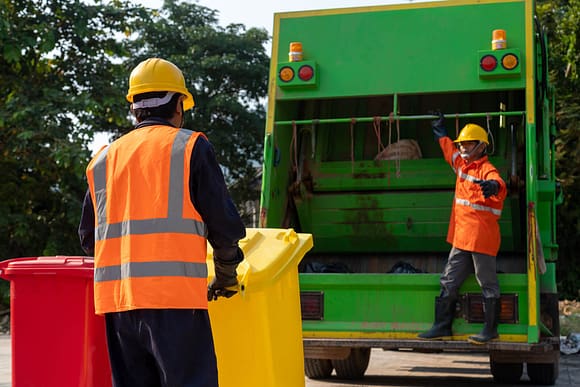
Our tech-enabled collection system ensures efficient pickup, optimized routes, and full traceability—keeping cities clean while recovering resources that would otherwise be lost.
Our Urban Circular Approach
✅ Smart Waste Collection – Digital logistics with real-time tracking and clean operations.
✅ Food Waste Recovery – Capture value from kitchen and post-consumer food waste.
✅ Community Composting – Local hubs for neighborhoods and institutions.
✅ Urban Farming Innovations – Using biomass to grow mushrooms, rooftop crops, and community gardens.
Why Partner With Baramouda?
✅ Cut Urban Waste – Reduce landfill pressure and prevent harmful methane emissions.
✅ Empower Local Action – Engage citizens through circular education and practice.
✅ Advance ESG & SDGs – Support climate goals, social impact, and sustainability mandates.
✅ Reimagine City Living – Build greener streets, cleaner air, and stronger food resilience.
Join the Circular City Movement
t Baramouda, we believe cities can become circular ecosystems—where waste fuels growth, and sustainability is a shared reality.
One bin. One building. One neighborhood at a time—we’re turning urban challenges into opportunities for regeneration.
Baramouda partnered with Naga Hammadi Sugar Factory (El Hawamidiyya Sugar Company) in Naga Hammadi, Qena Governorate, Egypt, to recycle 160,000 tons of sugarcane residues. Instead of discarding this agricultural waste, Baramouda transformed it into 64,000…
Baramouda collaborated with Cilantro to recycle 36,000 kg of used coffee grounds from 28 branches. The project turned organic waste into 7,200 kg of decorative compost and 120 kg of edible mushrooms — promoting urban…
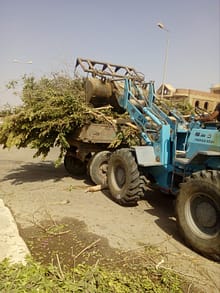
Baramouda implemented a pioneering project in Armant, Luxor Governorate, Egypt, to manage agricultural residues by working hand-in-hand with smallholder farmers. Through the collection and recycling of 20,000 tons of waste—including banana residues, tomato vines, sugarcane…
We’ve been helping cities, utilities, automakers, EVSE suppliers and commercial businesses take advantage of clean energy benefits that smart charging infrastructure affords. Our solutions deliver savings to drivers, businesses and grid operators.
Food Recycling And Anaerobic Digestion
Recycling Facilities essential in providing quality raw materials to the production industry, as they designed to separate recyclables into their individual material streams and prepare them for sale
Mechanical And Biological Treatment
Recycling Facilities essential in providing quality raw materials to the production industry, as they designed to separate recyclables into their individual material streams and prepare them for sale
Metal And Plastic Recycling Facilities
Recycling Facilities essential in providing quality raw materials to the production industry, as they designed to separate recyclables into their individual material streams and prepare them for sale